Why Keep Raising It, Knowing It Will Stop Growth?
For more than a decade, Satoshi Fujii, Takaaki Mitsuhashi and many other thinkers have argued about the dangers of raising the consumption tax. They have explained its harm to the economy logically, and understanding of the issue has spread among politicians and many ordinary Japanese.
Even so, the hikes are forced through. I suspect a certain ideology lies behind this. The Ministry of Finance is of course part of the problem, but that alone does not fully explain it, so here I consider the issue from a deeper, ideological angle.
A “Forward-Looking” Policy for a Post-Japan World
For the people I have in mind, Japan is a hopeless country that invaded China and Korea, and they harbour an ideology (or fantasy) of dismantling Japan at its roots, turning it into a region inhabited by world citizens, and thereby achieving world peace.
In their “forward-looking” (fantastical) view, unless Japan pursues reconciliation with China and Korea, this hopeless country will be isolated from the world and perish.
So when Japan is dismantled and becomes a multi-ethnic, globalist region, the consumption tax is, in their eyes, the fairest and most suitable tax for a world government to run that region stably forever. To them, raising it is a necessary tax — a piece of human wisdom — for the “good deed” of dismantling Japan and building the social systems of the future beyond it.
» What is the globalism that accelerates consumption tax hikes?
Their Thinking on the Consumption Tax
Setting aside the suffering it causes — deflation and poverty — they believe that realizing and maintaining the wonderful world of their ideology requires “social security for all generations” and a stable source of funding. Without it, they think, the global region of “Japan” cannot be sustained. (Ultimately, I suspect, they would dissolve all nations into one world and use the consumption tax to fund global welfare!)
A borderless, “one world” region of Japan would see many people coming and going freely. Taxes would have to be collected regardless of nationality, and the consumption tax is the only system they can imagine for running the region and its social security.
To keep all-generation social security going, they want a revenue source whose burden is shared widely and fairly across generations, and which remains stable despite economic cycles and demographic change. Hence they see the consumption tax as ideal — a stable source of funding for social security for all generations — and as a fair tax that creates no gaps between generations or divisions by nationality.
And since Japan would be a region rather than a nation, it would have no monetary sovereignty; unable to issue currency or even government bonds, the government would need stable tax revenue, with the consumption tax as its main source and public services run within its limits.
The Ideal World They Aim For
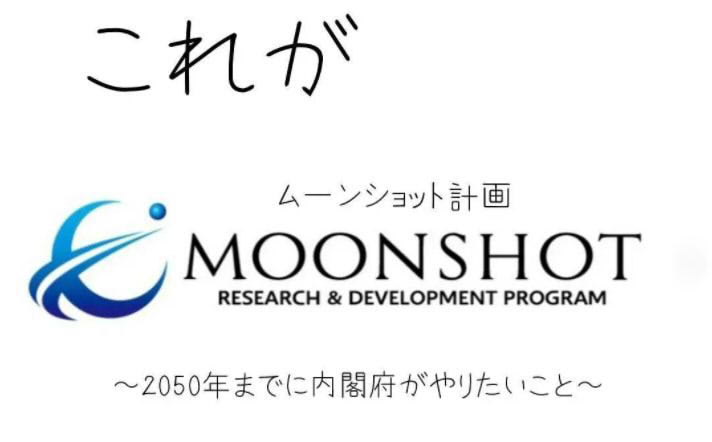
Behind such a grand vision (or fantasy) lies the globalist ideal of a world of human harmony, without war or poverty. The idea is that if nations — the cause of war — are dismantled and humanity unites, war will disappear and world peace will arrive around 2050. Without nations there would be no need for war, all military spending could go to welfare, and poverty would vanish.
But underlying this is the belief that, to achieve harmony among peoples, every country's customs, traditions, culture and history that stand in the way must be destroyed, and people's ethnic consciousness, nationalism and identity completely purged. That requires radical reform, opening and dismantling on a global scale, led by the United Nations (the forerunner of a world government). In fact, the UN has already begun a world revolution full of hypocrisy in the form of the SDGs.
Isn't This a Global Communist Revolution?
This globalist vision does not aim for anarchy. It would dismantle nations but establish a “world government” (something like the UN), achieving a single world currency and a unified world culture — in other words, it aims at a global communist revolution.
I am convinced that such a world would soon be struck by domination through concentrated power and wealth, corruption, famine and epidemics, collapse rapidly, and bring great disaster and war to humanity. It is a dangerous ideology (fantasy).
The world, unfortunately, is fundamentally cruel. Nothing is as dangerous as an ideology. Policies based on Mao Zedong Thought in Mao's China are said to have caused somewhere between ten million and a hundred million deaths.
Human beings remain human beings: we eat when we are hungry, and we have jealousy, desire and instinct. However much you try to revolutionize people, human nature does not change.
What are history and tradition for? We must not take lightly the history and traditions woven by those who came before us. History, tradition and culture are the wisdom of ancestors who lived in a cruel world, and we must not turn away from them.
So, from a conservative standpoint, I issue this modest warning to false elites, intellectuals and leaders: do not lead the world in the wrong direction.
— sandragon965
Profile
sandragon965.TV

I feel that to grasp the essence of art — something that seems meaningful yet isn't — you must face society: politics, economics, history, tradition, culture and ideas. So I write blog posts from time to time and take part in public discussion in my own way. (I also run a DIY YouTube channel.)
» sandragon965.TV (YouTube) » Instagram » X (Twitter)